Showing posts with label #aboutthebees. Show all posts

In #aboutthebees history hives honey Scott

A History of Honey

Image result for honey
The history shared by humans and bees begin back in the mesolithic, the Middle Stone Age, some 10,000 years ago. From the first evidence of foraging from bee hives, people's relationships with bees around the world developed, leading to the construction and use of containers to house hive and farm bees to people's convenience as early as 9,000 years ago. The farming materials gained from this foraging and farming of bees  honey, wax, royal jelly, and propolysis  provided nutritional, medicinal, cultural, and manufacturing benefits. Around the world, cultures, sometimes independently, incorporated bees and beekeeping into their societies and cultures, often incorporating them into mythology.


8,000 year-old Spanish cave painting depicting bee hive foraging.
https://en.wikipedia.org/wiki/Beekeeping#/media/File:Cueva_arana.svg

In Egypt, honey bees held great importance in their culture. Among the first to practice large scale beekeeping rather than foraging of natural hives, Egypt has a long and developed relationship with bees. Honey was used for everything from sweetening food to paying taxes and preventing infection. Embalming bodies utilized both honey and beeswax, which was also valued for its use in candles and cosmetics. Less well known bee products like royal jelly and propolis also have a history of medical use in ancient Egypt to prevent infection. Bees also played an important role in Egpytian monarchy. The symbols of the kings of Upper and Lower Egypt were a reed and honey bee respectively. Honeybee products played an important role in religious proceedings, with sacred animals being fed honey cakes, sarcophagi being sealed with beeswax after the body was embalmed in honey, jars of honey were sealed with entombed kings and queens among the many other treasures stored. Even in mythology, a translated Egyptian text states that when the sun god Re cries, his tears become bees upon landing.


Egyptian hieroglyphs from the Sun temple of Nyuserre, an Egyptian pharaoh.These 4,500 year old hieroglyphs depict an individual on the left blowing smoke into an apiary while in the centre and right, people are storing collected honey. https://lithub.com/who-were-the-geniuses-who-first-domesticated-the-wild-honey-bee/

In the Americas too, despite the lack of honey bees, many bees were still kept and cultivated for their honey. From Mexico down to Brazil, several species of stingless bees were kept for their honey production. The Aztec, Maya, and many Brazilian civilizations have been found to have practiced beekeeping for thousands of years. The variety of stingless bees cultivated in the Americas do not produce as much honey as the honey bees of Africa, Europe, and Asia, but their cultural and economic importance could still be seen. In the Aztec empire, along with being used as a sweetener and medicine, this honey found use as a way to pay tribute and, after colonization by the Spanish, a way to pay tax. Mythologically, bees in Aztec civilization were represented in Ah-Mucen-Cab, the god of bees and honey, depictions of which have been found in temples. Books describing the Maya also feature illustrations of gods collecting honey and describe rituals surrounding beekeeping.


Aztec incense vessel depicting Ah-Mucen-Cab and an Aztec apiary. http://www.latinamericanstudies.org/merida-museum-2.htm

A History of Hives

As time progressed, the ways bees were kept changed. Initially, the first apiaries were simply pottery and baskets that bees happened to build hives in. Following this, Egyptians began using stacked, horizontal tubes of dried mud. The honeycombs from these tubes would be collected, crushed, and placed in a container in the sun, causing the wax to melt and separate from the honey so that both cold be collected separately. The beeswax would float and in effect, seal the honey in the pot until later. Often, these pots would have spouts at the base from which honey could be poured without disturbing the wax.

Wall of tube beehives in Egypt.

Later, clay came to replace mud in these hive as their use spread through the eastern Mediterranean and Middle East. In China, wooden boxes began being used to provide spaces for bees to build their hives, while in western Europe, Skeps began to be weaved. These skeps were effectively upturned woven baskets of straw and grass which provided space for bees to build hives. However, these hives could not be inspected for health and to harvest them would require killing the hive. Later skeps began using a second basket that would separate the skep in two, allowing honey to be collected with less damage to the hive.

Image result for bee skep

Modern apiaries with removable frames began to be developed in the 1700s and become commonly used through the 1800s. These apiaries feature boxes containing frames we’re familiar with and utilize supers (modular boxes of frames) and queen excluders to ensure harvested frames contain only honey.
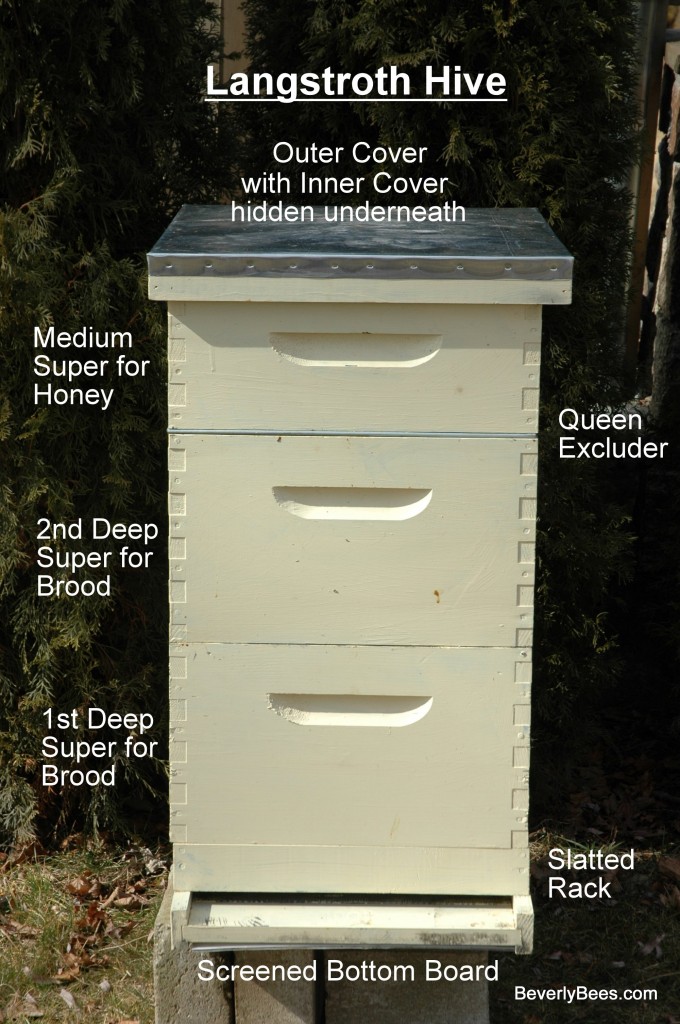
Langstroth Hive Parts
Langstroth-syle modern apiary.

A Blast from the Past!

Though they have been used as far back as the 1600s, top bar hives have been making a resurgence in the last 50 years. These apiaries do not use frames. Rather, they only have multiple bars laid across an open box horizontally. The bees will then build their combs off these bars where they can then be harvested. This is a less expensive alternative to modern apiaries and also allows aesthetically pleasing combs to be harvested whole.
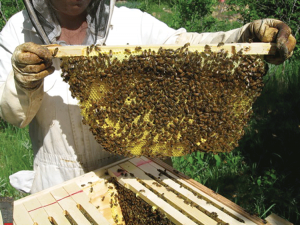
A bar of a top bar hive and the comb built off it.

From the Stone Age to the digital age, people around the world have been using honey. An early sweetener and with many medicinal properties, honey and the bees that make them found their way into many cultures and their goods, into many cultural practices as well as more mundane uses. Over the centuries and millennia, bees have been kept and raised in a wide variety of containers and methods, developing into the modern apiculture of today, with modular hives designed to ensure honey made in these hives is as pure as possible. All thanks to some people who left pottery out and the bees that decided to make it their home.

References


- Scott B.

Read More

Share Tweet Pin It +1

0 Comments

In #aboutthebees ancient bees history Scott

A History of Bees


Bees, both wild and farmed, are a wonderful and essential component of modern ecosystems and economies. But how did this useful little insect come to be? Today there are over 16,000 species of bees throughout the world, all of which originated from an ancestor in the distant past which has proliferated and spread throughout the world. What was this ancestor? Where did they spread from? And how have they shaped the world we know today?


Bees and Flowers: Best Friends from the Beginning

Like many pollinating insects, bees have their origins deeply connected to the evolution of flowering plants in the mid Cretaceous. Over 100 million years ago, flowering plants began to spread across the cretaceous world, toppling non-flowering plants as the most prevalent terrestrial plant species and opening up new opportunities for whatever organisms could utilize these new plants. One such organism was a carnivorous wasp-like insect that fed on pollen-eating insects that were emerging at the time. This new species began to adapt to use this new food source, directly eating pollen itself. However, these new pollen eaters were still solitary like most modern bee species, It wasn't until tens of millions of years later that the first eusocial bees (bees that live together in social systems with labour division) appeared.

As flowering plants established themselves as the dominant terrestrial plants and their connection and interdependence with pollinators such as bees grew, the ancestor of modern bees began specializing in pollination as a lifestyle. Their diets developed to become dependent on the pollen and nectar of these plants and the pollination of specific plants. This coevolution (evolution resulting from complimentary pressures two closely-involved species place on each other) helped drive the diversification of both flowering plants and bees. Genetic evidence suggests that it was this coevolution with flowering plants that spurred the explosion of diversity of bees, which have remained diverse and prominent to this day.


Unlikely Cousins


Coming from a shared ancestral species, bees split off from wasps through their coevolution with flowering plants; their lifestyle shifting away from predation and parasitism to mutualism in the form of pollination. But, bees themselves wouldn't stay unified for long. The early wasp-like ancestor of bees, soon after differentiating from wasps, had ants differentiate from them. This new family of insects found a different way of life in its environment, doing away with only feeding on pollen and nectar, becoming entirely eusocial, and growing wings in only special circumstances. Bees and ants, despite their differences, are more closely related to each other than either of them are to wasps.


Where Did Honey Bees Come From?

There are seven species of honey bee found throughout the world, but only one, Apis mellifera, the European honey bee, is farmed and cultivated around the world. Its native range reaches from northwestern Africa, through Europe, and into western Asia. Within this area, dozens of subspecies exist. However, six more honey bee species are found throughout Africa, Europe, and Asia and thousands of non-honey bees around the world. This begs the question of where the common ancestor of these honey bees came from?


The current range of honey bees. (Obtained from https://en.wikipedia.org/wiki/Honey_bee)

Originally, it was thought that the ancestor of honey bees originated in Africa. However, as of 2014, new genetic evidence suggests that honey bees originated in Asia, where they then expanded and diversified to the rest of the world. The European honey bee we're all familiar with split from its cousin Apis ceranae, the Asian honey bee, only 6 to 9 million years ago in southeast Asia, where  it then diverged into the 32 known subspecies today. Since being farmed, humans have spread these bees throughout the world.


The Marks of Coevolution


(Obtained from https://en.wikipedia.org/wiki/Ophrys_apifera)

The hundred twenty million year-long coevolution between flowering plants and bees can be seen to this day. Ophrys apifera, the bee orchid, is a flower found throughout the Mediterranean and surrounding area, reaching as north as Ireland. This orchid has evolved to look similar to a bee, and in its southern ranges solitary bees of the Eucera genus attempt to mate with the artificial bee, pollinating the flower in the process. However, in the northern ranges of the flower, self-pollination is almost exclusively used. Few bees attempt to mate with it. This has led some to suspect that in the past, another species of bee was the target of the orchids mimicry and since its disappearance the flower has been forced to adapt either to self-pollinate or to attract different bees.

The history of the honey bee is rich, with an explosion of variety following the spread of flowering plants and a close relationship with those plants to this day. Bees and flowers have driven each other to an enormous variety of thousands of organisms and through their pollination along with that of other pollinating species, enable the great variety of plants, fruits, and nuts we enjoy today. All thanks to insects in the age of dinosaurs forming a relationship with new plants that has stood the test of time.


If that isn't commitment, then I don't know what is.


Sources

https://www.sciencedirect.com/science/article/pii/S0960982217301458
https://www.sciencedirect.com/science/article/pii/S096098221300256X
https://www.sciencedirect.com/science/article/pii/S0960982213010567
https://americanbeejournal.com/the-elusive-genesis-of-apis-mellifera/
https://www.scientificamerican.com/article/the-beguiling-history-of-bees-excerpt/
http://www.killowen.com/genetics14.html
https://zoom-ology.com/2018/08/23/reproductive-mimicry-the-bee-orchid/
https://en.wikipedia.org/wiki/Bee
https://www.scientificamerican.com/article/the-beguiling-history-of-bees-excerpt/
https://en.wikipedia.org/wiki/Honey_bee


- Scott B.
Read More

Share Tweet Pin It +1

0 Comments

In #aboutthebees infection Megan nosema

Bee Aware - How Do Sick Bees Affect Us?

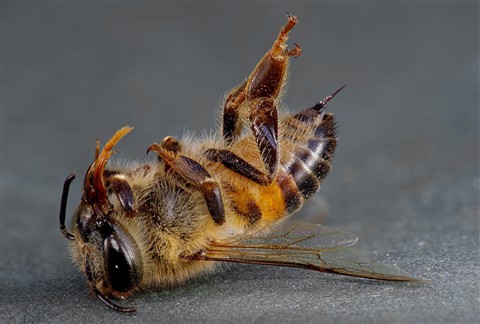
Dead Bee With Sting
Hello everyone! Our team has been working hard to help the sick bees, but how exactly does a bee get sick? What happens to bees when they get sick? How do sick bees affect humans? In this blog post I will discuss the fungal parasites that affect bees and what the overall effects are of bees getting sick.

Bees GIF

There are two microsporidian parasites that can affect bees: Nosema apis and Nosema ceranae. N. ceranae originally was a pest of the Asian honey bee but recently started to infect the European honey bee, and is more harmful than N. apis. That's why N. ceranae is the focus of our project in helping #SaveTheBees.

What happens when a bee gets infected with N. ceranae? The bee experiences changes in their overall appearance and physiology. They will have trouble digesting their food, they may become a forager at a young age and they have a shortened lifespan overall. If the queen becomes infected, her lifespan is shortened and she may lose the ability to lay eggs. This reduces the colonies' performance because the population declines, the bees are unable to perform their duties to the best of their abilities, which threatens the overall health of the colony. Entire colonies that are affected by this parasite may ultimately die.

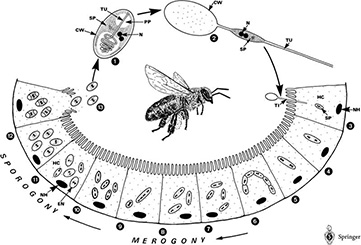
Now, let's get into the details of how this parasite infects the bees. N. ceranae is a fungal infection, and fungal infections use spores to spread. The bees ingest these fungal spores during their day-to-day duties, such as eating or drinking contaminated sources, or they can be picked up from other infected bees in the hive by cleaning contaminated surfaces. It only takes one spore to cause an infection, and once infected, the spore count can get as high as 30-50 million spores in the bee midgut. The spores germinate in the midgut of the bee, and this is because in this area they are able to steal nutrients from the bee for themselves. The spores continue to grow and replicate inside the midgut, and can spread to the digestive tract which then leave the bee as feces. The fecal matter then contaminates the water/food/other surfaces, which can then spread to other bees.

Fun Fact: Spores take only 30 minutes to germinate, once ingested.

Once the spore gets into the bee, the contents are injected into an epithelial cell, where they then multiply until the cell bursts, releasing all of the spores back into the midgut. A diagram of how this occurs is located below.


Bee Drugs GIF - Bee Drugs High GIFs

So how do you know when the bees get sick? 

Unfortunately, there is no good method of detecting when the bees are sick, and that is where we come in. This year, our iGEM team aims to create a detection system to detect when bees are sick. However, until we finish our work, the only way to really tell when bees are sick is to look for some of the following symptoms: declining colony populations, lower production of honey, reduced number of offspring, and poor survival over the winter. These symptoms don't necessarily mean that the hive is infected; the only way to know for sure if the bees are infected is to look for the spores under a microscope. This way is very inefficient because it takes a lot of time, money, and resources.

Why should we care about sick bees?

Bees are actually incredibly important; they perform many functions in our ecosystems that are essential to our survival. The biggest impact that bees have on humans is that they are pollinators. This is a critical component in helping plants grow and produce the food that we need to eat to survive. Bees produce honey, which is a sweet snack for humans and it also serves as a food source to many other animals. Bees are also an integral part of the food chain and are preyed on by birds, raccoons, and other insects. Bees are super important to the function of ecosystems because not only do they build their own hives, they are also responsible for pollinating plants that are the homes to other species of insects and animals. Bees are also responsible for a lot of the diversity in ecosystems, and there are many species of bees that are adapted to certain types of plants in order to increase the success of pollination. As you can see, bees are extremely important to us, and they play a huge role in the ecosystem. The world would lose a lot of biodiversity, and food production would be greatly affected if the world were to lose bees. Hopefully after reading this paragraph, you can see what a catastrophe the world would go through if all the bees were to die from being sick.

Bee GIF - Bee GIFs

So what can you do to help save the bees? The first step is being aware and educated about the issues surrounding bees. By reading this article, you are already taking the first step! You can also plant flowers for bees to pollinate, support local beekeepers by buying fresh and local honey, and don't use pesticides on your garden.

Check out this really cool website for more information!

Sources

https://beeaware.org.au/archive-pest/nosema/#ad-image-0
https://www.ncbi.nlm.nih.gov/pmc/articles/PMC4924483/
http://agriculture.vic.gov.au/agriculture/pests-diseases-and-weeds/animal-diseases/bees/nosema-disease-of-honey-bees
https://friendsoftheearth.uk/bees/why-do-we-need-bees
http://www.pthomeandgarden.com/5-ways-bees-are-important-to-the-environment/

Thanks for reading!

- Megan M.

Read More

Share Tweet Pin It +1

0 Comments

In #aboutthebees communication hives Megan

Inside The Beehive

HOW TO TELL IF YOU HAVE A STRONG HIVE

Introduction

On the outside, a bees' nest looks like a simple place where bees are flying in and out and going about their daily business. However, the bees' nest is really a complicated interconnected network where each bee has a job to do in order to contribute to the collective of the hive. Have you ever wondered how bees work together in order to produce honey? Each bee belongs to one of three groups within the hive, with each group having a specific job to do. Let's take a look at some of the work done by each of the three castes: the workers, the drones, and the queen

Homer Simpson DGAF About Bees GIF - Bees Homer HomerSimpson GIFs

Workers

Workers are the largest of the three castes, consisting of 85% of the hive. These are the bees that are responsible for leaving the hive to collect pollen and nectar and are also responsible for various tasks around the hive, including feeding the queen, drones and larva, and making beeswax. How are these jobs divided up between the workers, you may ask? They are divided by age! Worker bees, at some point in their short 506 week lives, will likely end up participating in all tasks in the hive.

Worker bees start off as an egg in a part of a honeycomb. Then, the first task they are assigned is to clean out the part of the honeycomb where they grew. They then are given the task of nursing bees, which means they have to help feed newly hatched larva and keep them warm. Then, as the bee ages, they will begin to do some housekeeping around the hive. There is so much for these bees to do, including storing nectar and pollen, building honeycomb, guarding the entrance, and they are even responsible for warming the hive if it gets too cold. Then, the worker will become a forager, after around 20 days old which means they are the ones that will leave the nest to collect nectar, pollen, and any other resources the hive may need. Workers will be foragers until they die, about one month after they are born.

Fun fact: All worker bees are females. However, they are infertile and are unable to produce offspring of their own due to a pheromone released by the queen.

Another fun fact: Worker bees live longer in the winter since they spend more time inside the hive, keeping it warm instead of going out and gathering supplies. 

Bees Pollen Pollination GIF - BeesPollen Pollination AdventureTime GIFs

Drones

Drones are the male bees, and their purpose in life is to mate with the queen. They have no foraging tools nor do they have stingers, but they are equipped with large eyes to help them find the queen to mate with. Therefore, they depend on the workers to feed them and keep them alive. There aren't too many drones in a hive, since a queen only needs to mate once. Any eggs that the queen lays that are unfertilized will become drones. When a drone mates with the queen, they die. 

Fun fact: A drone's eyes are almost twice the size of a worker bee's.

Bee GIF - Bee GIFs

Queen

There is only one queen bee in a hive. The queen lays the eggs of every bee born in the hive and she influences the bees in her hive using pheromones, which are chemicals that are released into the hive. How does the hive determine when an egg is to become a queen bee? The process starts when the hive begins to become full or when the ability of the queen to lay eggs diminishes. Workers will build special cells that hang off a honeycomb, where the existing queen will lay some eggs, and the larvae in these cells are fed royal jelly. It is important that the queen mates with multiple drones before she lays eggs in order to assure genetic diversity in the hive. Once the new queen is established, she goes cell-to-cell and stings all the other queen bee cells, and a battle ensues between them. The winner becomes the new queen. Then the old queen, some workers and drones leave the hive and find a site for a new one.

Fun fact: The queen is the largest bee in the colony.

Bee Busy GIF - Bee Busy Flying GIFs

Communication

So how do workers, drones, and the queen all communicate to ensure all of the jobs are done and that everything in the hive is running smoothly? There are a couple of methods of communication, including...

Pheromones: The queen gives off a pheromone that allows her to communicate with the bees in the hive. The pheromones are what keep the worker bees from being able to produce viable offspring, and are also what attract the drones to mate with her, and also signal to the hive that she is doing well. Pheromones do much more than this; they can also alert the hive if there is a threat. If one bee stings something, the rest of the worker bees are alerted to the threat with pheromones. There are two types of pheromones, the primer pheromones that are released by the queen to ensure everything that stays as it should, and the released pheromones which are released by the workers in response to events.

Movement: The workers may perform a series of movements to teach other workers the location of food sources away from the hive. The movement series is known as the "waggle dance" and the distance and speed indicate the distance of the food source, and the way the bee aligns their bodies is indicative of the direction of the food source.

For more information, check out these links:


Works Cited


Thanks for reading!


- Megan M.

Read More

Share Tweet Pin It +1

0 Comments

In #aboutthebees danger Jesus killer

Africanized Bees

Image result for the bee movie
Hello there, my name is Jesus and after forgiving everyone's sins and saving the entire human race, I decided to join iGEM to save the bees this time. Just kidding I couldn't even save my goldfish when I was 6... but I'll try my best to save the bees I promise. Anyways, so it was my turn to write a blog and I asked myself, "What is a good bee-related topic to write about?" It didn't take me too long to find the answer; I wanted to write the Barry Benson bee-ography. However, I realized it takes books to describe the life of such an almighty character, so I'll leave that to the professional writers that actually know what they're doing.

Instead, I will explain briefly what you need to know about a particular bee subspecies: the deadly and aggressive Africanized bee.

xxxxxxxxxxxxxx
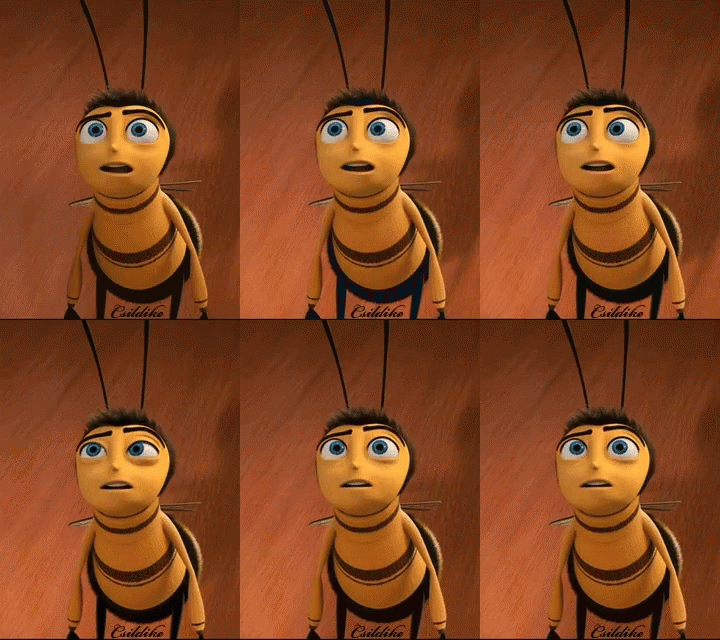
Barry Benson PhD, exchanging highly cultural interests with followers.

The Africanized bee is one of the 29 recognized subspecies of the honey bee (Apis mellifera). It is a hybrid emerging from the cross-breeding of multiple European honey bees (A. mellifera ligustica and A. mellifera iberiensis) and the East African lowland honey bee. Thus, it is called the Africanized bee (A. mellifera scutellata), or more lovingly, the "killer" bee.

This subspecies appeared for the first time in 1956 as African bees were imported to Brazil in an attempt to cross-breed them and maximize the honey production. Unfortunately, a number of sneaky African queen bees escaped from specialized facilities a year later, just like a teenager escaping the house at midnight on a quest for a dopamine rush facilitated by alcohol. The bees didn't get the punishment of their lives though; instead, they settled all over the continent and causing the death of approximately 1,000 people in the process.


How dangerous are Killer Bees?

Even though Africanized bees can be a little intimidating at first glance, they are not as apocalyptic as Hollywood presents them. As a matter of fact, the venom released by Africanized bees is the same as the venom released by European bees.

The main difference between the two is, in fact, that Killer Bees would attack much faster and more aggressively; they will attack even if seemingly unprovoked. Even wearing a strong perfume and walking near a hive of Africanized bees would be enough to upset them. They become more defensive than Mexicans when they hear that TacoTime has the best tacos on Earth.


Statistics provide that Africanized bees attack in greater numbers compared to other subspecies. More precisely, it is 10 times more likely to get stung when attacked by these raging bugs. European bees would normally defend their hive by staying in it and attacking the intruder with only a few bees (10-20 bees), whereas Killer Bees would chase the intruder at high speeds for long distances with an army of about 100. The Africanized honey bee takes no chances; it will defend the hive in situations that would normally be ignored by European honey bees.


Recognizing Africanized Bees

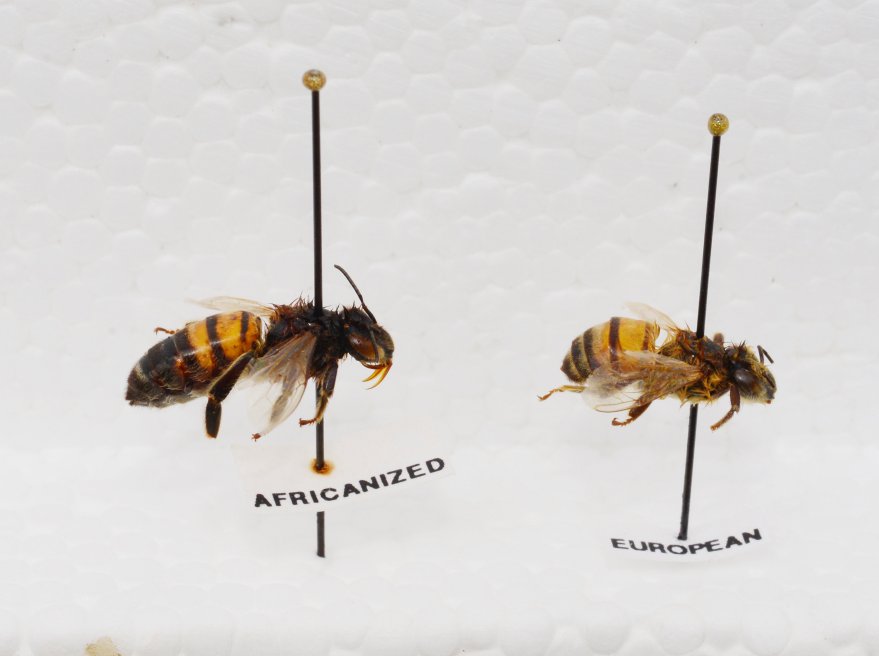
Aside from the behavioural dissimilarities pointed out above, differentiating Africanized and European bees based on appearance is no easy task, especially when they're all flying all around you and you're trying not to panic. Even though cautious morphological tests are performed to determine exact physical differences between them, one notices a colour and size change when analyzed side-by-side; Africanized bees are larger and darker compared to other species.


Comparison between Africanized and European bees

A remarkable distinction are the locations where the two types of colonies establish their hives. European bees build their nests in large and broad areas such as tree hollows and house chimneys. On the counterpart, Killer Bees are not as picky selecting their spot, as they can settle in even more confined spaces like holes in the concrete or even hanging off a tree branch. This subspecies also has the capacity of invading a European hive and taking over it. They do this by settling the Africanized colony, including their queen bee, near a European hive. They proceed to exchange resources (e.g. food and pheromones) to ensure adoption of European worker bees, and lastly the European queen bee mysteriously disappears and just like that, the European hive becomes Killer Bee territory.


A Remarkable Attack

To give you an idea of the magnitude of an attack, I'll give you a couple of examples. In October 2014, a news source reported the case of a lawn care worker in Arizona who was killed by a swarm of 800,00 killer bees. The worker was not alone at the time; his colleagues were also stung approximately 100 times but they were lucky enough to survive. This atrocious attack was provoked when the workers turned on their lawn mowers in an attempt to treat a lawn, but such a bothering noise disturbed a big hive sitting in the attic and the rest is history.

A more recent event took place a couple of months ago. A man in southern Mexico carrying firewood encountered an angry swarm of Africanized bees. He was able to escape a first attack leaving his stuff behind and running as fast as he could. However, when coming back for his cargo, the man received a second attack where bees stung him presumably at least 500 times.


Ultimately, Africanized or not, it is best to treat all bees equally. When approached by any kind of bee, it is recommended not to panic in order to avoid any sudden movements that may cause the bee to feel threatened. If approached by a raging swarm, experts suggest you should run against the wind as fast as possible. This makes it more difficult for bees to keep up with you. Jumping into water may not be so effective all the time especially with killer bees, as they persevere when defending a hive and you have to get your head out of the water at some point to breathe.

Now that you are somewhat familiar with the most aggressive bee subspecies, I hope this article did not worsen your irrational bee fear. Thanks for your time, and I hope you never have to deal with a swam of Africanized bees in your life.


References

"Africanized Bees." Smithsonian Institution. Accessed July 03, 2019.

Alexander, Harriet. "Swam of 800,000 Bees Kill Man in Arizona." The Telegraph, October 09, 2014. Accessed July 2, 2019.


Ellis, Jamie, and Amanda Ellis. "Africanized Honey Bee - Apis mellifera scutellata." Africanized Honey Bee - Apis mellifera scutellata  Lepeletier. January 2008. Accessed July 03, 2019.


Ojar, Christina. "Africanized Honey Bee." Introduced Species Summary Project. March 1, 2002. Accessed July 03, 2019.


Vasquez, Herlindo. "Abejas Asesinas Provocan La Muerte a Senecto En Chetumal." Turquesa News, May 1, 2019. Accessed July 02, 2019.


Pictures

1

2


- Jesus H.

Read More

Share Tweet Pin It +1

0 Comments

In #aboutthebees Brittany pollination

Bee-ing Busy Pollinating For Us


When I first started iGEM I thought that the bees' only purpose was to strike fear into the heart of all humans and stab us with their butt swords. I have since learned that they are an important link in the agricultural industry by: giving us honey, beeswax, and feeding us. They help feed us through pollinating other plants, spreading seeds across fields, and helping our plants survive. For such a small little guy, they really do so much for us and are completely disregarded in that. So welcome to the Ted Talk of Brittany Sauter as I embark upon telling you about how amazing and incredible these little critters are — while I try not to panic due to my huge phobia of bees.


Pollination is not an abstract topic to us. Just recently, when visiting St. Luke's Catholic School, the grade 4 class was talking about pollination, plants, and of course the bee. The bee, in all its majestic form, goes to the plant to collect nectar and, just by chance in the process of getting that nectar, it gets pollen (the seed) on its hind legs (1). Since the bee is a hungry guy, it wants more nectar but not from the same plant. So, it flies away to a new plant to get nectar. In that process of leaving the first plant, flying around randomly, landing on the second plant and getting more nectar; it has pollinated (1). Which is pretty cool, if you ask me!


This entire process of the plant and the bee working together is called co-evolution, which is pretty common. Co-evolution is when two or more species affect each other's evolution, either aiding it or negatively affecting it. In this case, the bees' and flowers' relationship serves as an example of positive co-evolution (2). Now you might be wondering, "How did they co-evolve?" It's simply done by a series of adaptations and specializations. It is a constant rotation between flowers adapting to bees and bees adapting to flowers, which is something that even Darwin noticed. It turns out bees are attracted to plants with bilateral symmetry, the colours blue and yellow, and at manipulating flower parts. Since the plant wants to be pollinated by bees, the plant has selective pressures to favour those adaptations. Flowers influence bees by wanting them to have hairy back legs, a specific body type, and effective pollination. In turn, the bee also has selective pressures favouring those adaptations. This is a cycle, with the two constantly influencing each other to be preferred (3). 

Honey bees are quite adaptive since they are able to collect pollen from multiple plants and most of their life is spent collecting pollen, making them super important guys (4). This beneficial relationship between bees and flowers feeds us so without them, life would be not so gouda.


I know right? Pollination is awesome. These two have basically evolved together to feed themselves, help the plant, and we take that to our advantage. So besides bees, what are  other ways that pollination happens? Pollination is the act of pollen being moved from the male part (the anther) to the female part (the stigma) of the plant. In summary, pollination is the act of making the next generation of plants; however, the seeds that go to the stigma must be that of the same species. How pollen moves is by a vector, or pollinators, the most common being bees. Other vectors include the wind, water, birds, various insects, bats, and other animals that even graze by flowers. Using pollinators is a method called cross-pollination; however, there is another type called self-pollination where the plant just fertilizes itself (5).


So then, why are bees going extinct if they are co-evolving with plants and helping each other? The answers to that are simple: climate change, insecticides, pesticides, and herbicides. Since these are constantly being sprayed on our agriculture plants, they are affecting the bees' stress levels. Moreover, if one type of pollinator is stressed, the other pollinators could also be affected. 

You are probably thinking, "Well maybe only spray the crops with herbicides since the bees are not a plant?" However, the answer isn't that simple. Our research is dealing with an intraparasite called Nosema ceranae and if the bee has an overly high level of this intraparasite and then comes into contact with areas sprayed with herbicides, the herbicides make the bees more susceptible to these toxins and eventually kill them. If you spray the area with insecticides, this will most certainly damage the bees since they are an insect and pesticides harm them (6).


This figure shows the percent of bees dying with either spraying the crops with 0.1% (the recommended amount) of a surfactant called "Boost" or 0.01% of it. Surfactants are chemicals used in herbicides, insecticides, and fungicide sprays (7). If the same chemicals are being used in both herbicides and insecticides then we can't only use herbicides. Like I said above, the answer is not that simple... or is it? We could just stop spraying our crops with damaging chemicals that affect not only the pollinators, wildlife, but also people who are spraying the chemicals on these crops. But that is probably another Brittany Sauter "Ted Talk" to look at in the future.

Hasan Minhaj Popcorn GIF by Patriot Act

So there we have it folks, the Brittany Sauter "Ted Talk" on pollination and the bees. We have officially come full circle on how not only bees and plants have co-evolved, but also what is affecting the bees in their efforts to pollinate and influences on them. I hope this was informative to us all and that you look forward to our future blog postings.

Jennifer Aniston Flirting GIF


References

  1. https://bees.techno-science.ca/english/bees/pollination/default.php
  2. https://www.google.com/url?q=https://www.nature.com/subjects/coevolution&sa=D&ust=1561328203384000&usg=AFQjCNFD1QlokC0pH0Y9TRgtXbZt6TF6Eg
  3. https://www.wnps.org/blog/coevolution-and-pollination
  4. https://www.otago.ac.nz/genetics/otago038359.pdf
  5. https://www.fs.fed.us/wildflowers/pollinators/What_is_Pollination/
  6. https://www.nrdc.org/sites/default/files/bee-deaths-FS.pdf
  7. Effect of surfactants on honey bee survival. N Z Plant Prot - Scientific Figure on ResearchGate. Available from: https://www.researchgate.net/figure/Honey-bee-mortality-when-sprayed-with-different-amounts-of-two-concentrations-of_fig1_264839364

- Brittany A. S.

Read More

Share Tweet Pin It +1

0 Comments

In #aboutthebees anatomy Ron senses

A Bee-utiful Look Into Basic Bee Neuroanatomy


no one:

absolutely no one:                          


me: LeT's LeArN aBoUt bEe BrAiNs

.
.
.
What up y'all, Ron here. I figured that I'll do something slightly different for this blog post and teach you guys a lil' something about bee neuroscience!


Because, well, why not? Besides, I figured that it would be interesting to look into (me being a neuro kid and all) so, hey, this could be a learning experience for all of us here!

The importance of antennae

Honey bee antennae are very sensitive organs that deal with a lot of information, including:
- olfaction (smell)
- somatosensation (touch)
- gustation (taste), and
- air motion (for flight speed)
Since these organs are very sensitive, bees have to frequently clean them using their front legs to keep them in tiptop shape (4).


Holy heck aren't they adoooooooooooooorable??

Olfaction

A bee's sense of smell is particularly important both on a colonial as well as on an individual level. As an example, bees release an odor called the "alarm pheromone" if they sense danger, letting other bees know of the danger and allowing them all to prepare accordingly. Bees can also use their sense of smell to locate sources of nectar and find their way back to their hives. In fact, if a bee shows up to the hive without having the correct odor, the guard bees at the front of the hive will even expel them! (4)


A bee preventing an invader from entering the hive (1967, colourized).

Somatosensation

Bees also have a well-developed sense of touch, extending from their antennae to all of the tiny tactile hairs throughout their body (3). Through their sense of touch, bees can gauge the physical dimensions of an object, such as a honeycomb (4). Bees can also use their sense of touch to communicate with other bees as is the case of their adorable waggle dancing, which is how bees share information about flower patches for potential nectar sources.
One of the first recordings of a bee communicating a nectar source to other bees (1564, colourized).

Vision

Bees have two kinds of eyes: their three small ocelli (singular ocellus) and their two big compound eyes. The ocelli are simple eyes with single lenses that help the bee navigate by judging light intensity, allowing them to stay properly oriented in flight (5, 6). Their compound eyes, meanwhile contain thousands of smaller eyes called ommatidia (singular ommatidium) that form thousands of images that are then integrated by their brain to form a cohesive picture of their surroundings (6). If you want to know more about bee vision specifically, this article goes into much greater detail.


The central nervous system of a honey bee

The central nervous system (CNS) of any organism is widely regarded as its most important organ system because it takes in information from the organism's environment and allows the organism to respond accordingly.

While the human CNS consists of the brain and the spinal cord, the CNS of a honey bee consists of the brain and various ganglia (singular ganglion; a cluster of neuronal cell bodies in the periphery) distributed throughout its body (2). The honey bee brain integrates the processing of its senses, whereas its ganglia mediate locomotion and other autonomic unconscious processes. As an example to see how these work together, a beheaded bee would be able to walk and move its legs around, but it would be unable to fly as it has no head to process balance and coordinate flight (2)!

The bee brain

Despite being no bigger than a sesame seed and only having about 1 million neurons (compared to the 100 billion neurons that we humans possess), the brain of a bee is highly structured and highly specialized. Sensory information from the antenna is received by the antennal lobe (AL) of the bee brain, while visual information is mediated by the medulla (ME), lobula (LO), and protocerebral lobes (PL), as shown below (7).

All of this sensory information is then sent to a highly dense and highly specialized pair of neuronal cell body clusters called the mushroom bodies (MB). The MBs act as an association area and take in various sensory information to interpret them for higher-order processing (1). In doing so, the MBs allow the honey bee to learn all about its environment, act upon the sensory stimuli immediately, and then use it for the future. In one study, bees have even been shown to remember a visual stimulus and see if it matches a new visual stimulus, indicating that bees have the capacity for visual memory and for more complex decision making (8).

A bee undergoing rigorous scientific experimentation (1945, colourized).

All in all, in case you haven't caught on yet, bees are rad as heCK. This blog post baaaaaaaaarely scratches the surface and I still have a lot to learn myself about bee anatomy (potential allusion to future posts by me, question mark?). If you need something else to satisfy your bee anatomy fix in the meantime, here's a rad video on how bees see the world around them! 

References

  1. Barron AB, Gurney KN, Meah LFS, Vasilaki E, Marshall JAR. Decision-making and action selection in insects: inspiration from vertebrate-based theories. Frontiers in Behavioral Neuroscience 9, 2015.
  2. Calvert C. Nervous system of honey bee [Online]. LinkedIn SlideShare: 2014.
  3. Foden S. How Do Honey Bees Smell, Feel and Taste? [Online]. Animals: 2017.
  4. Information Sheet 6 [Online]. Information Sheet 6, Honey Bee Senses. College of Agriculture and Life Sciences, University of Arizona.
  5. Paulk AC, Dacks AM, Phillips-Portillo J, Fellous JM, Gronenburg W. Visual processing in the central bee brain. Journal of Neuroscience 29: 9987-9999, 2009.
  6. Riddle S. How Bees See and Why It Matters [Online]. Bee Culture 2016.
  7. Rybak J. The digital honey bee brain atlas. Honeybee Neurobiology and Behavior, 2011.
  8. Zhang S, Bock F, Si A, Tautz J, Srinivasan MV. Visual working memory in decision-making by honey bees. Proceedings of the National Academy of Science 102: 5250-5255, 2005.

- Ron Miguel B.

Read More

Share Tweet Pin It +1

1 Comments